Introduction
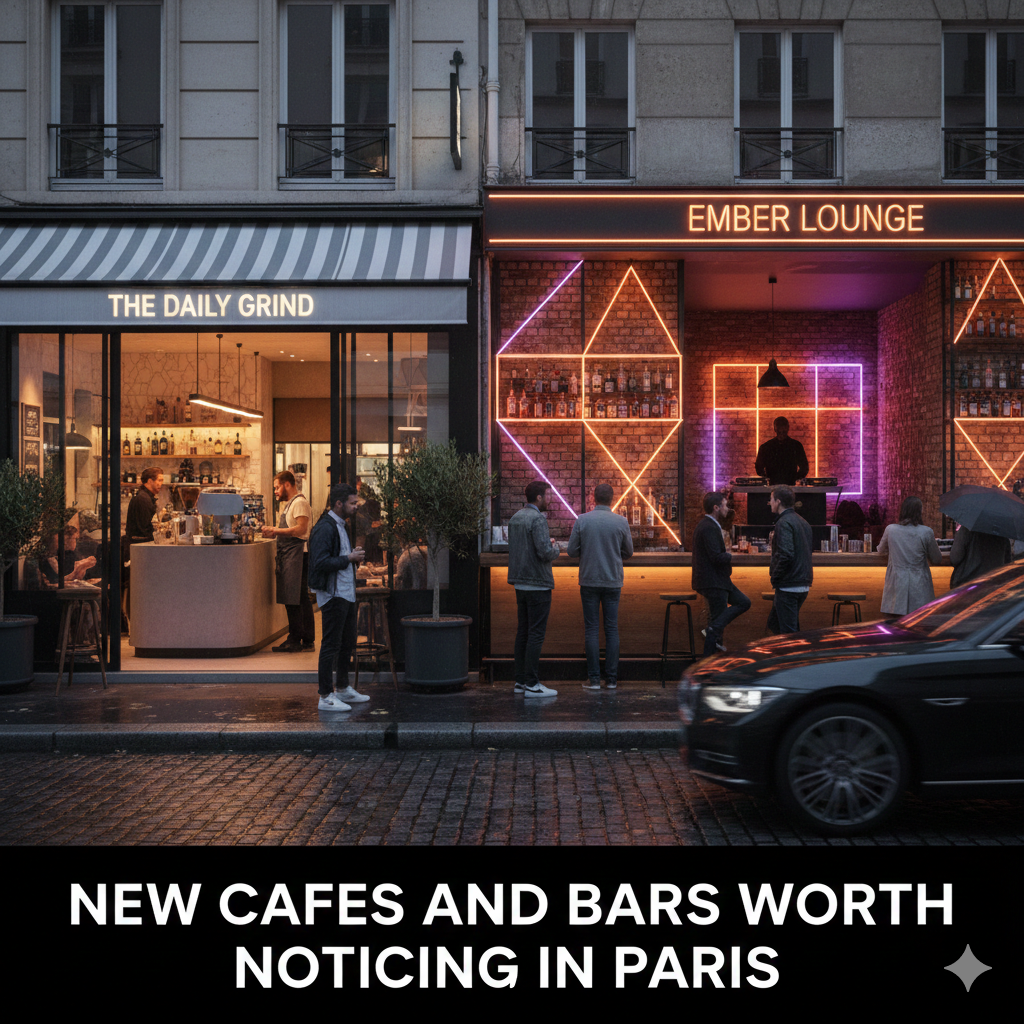
New cafes and bars opening in [City] appear constantly, but only a small number are designed to last beyond the first few months. Locals learn quickly which openings are experiments and which are foundations.
Right now, the pace of openings is faster than ever, driven by changing work habits, nightlife shifts, and lower barriers to launching small venues. This article explains how to evaluate new cafés and bars realistically, what locals watch for before returning, and how to tell early on whether a place is building a community—or just chasing attention
Why New Openings Feel Exciting (and Risky)
How Cafes and Bars Launch in [City]
Early Signals a New Place Is Built to Last
What Locals Test Before Becoming Regulars
Common Beginner Mistakes With New Openings
Information Gain: The Second-Month Test
Practical Insight From Experience
Comparison Table: Flashy
Openings vs Durable Venues
FAQS
CONCLUSION
under why New Openings Feel Exciting (and Risky)
New places promise novelty, but novelty comes with uncertainty.
In [City], most new cafés and bars experience:
A curiosity spike
Inconsistent service early on
Rapid feedback from regulars
This phase is normal. The risk comes when owners prioritize first impressions over sustainable routines.
Why First Weeks Are Misleading
Crowds in week one say more about marketing than quality.
H3: The Pressure to Impress Early
Many venues overextend before systems stabilize.
How Cafes and Bars Launch in [City]
Openings usually follow one of two paths.
H3: Concept-First Openings
Strong branding, visual identity, and social presence—but operational gaps.
H3: Routine-First Openings
Limited menus, shorter hours, slower growth—but stronger foundations.
[Expert Warning]
Places that launch big often struggle to maintain consistency once attention fades.
Early Signals a New Place Is Built to Last
Locals don’t decide on one visit. They look for patterns.
H3: Menu Discipline
A focused menu that doesn’t change weekly signals confidence.
H3: Staff Familiarity
Seeing the same faces over time matters more than speed.
H3: Crowd Composition
Regulars returning midweek are a stronger signal than weekend lines.
What Locals Test Before Becoming Regulars
Residents test new places quietly.
H3: Off-Peak Performance
Quality during slow hours reveals real standards.
H3: Pricing Logic
Sustainable places price for repeat visits, not one-time splurges.
[Pro-Tip]
Visit new cafés or bars after the initial buzz fades—usually weeks four to six.
Common Beginner Mistakes With New Openings
Mistake 1: Assuming New Means Better
Fix: Judge consistency, not novelty.
Mistake 2: Visiting Only Once
Fix: Revisit under different conditions.
Mistake 3: Confusing Atmosphere With Comfort
Fix: Ask whether you’d return without guests.
[Money-Saving Recommendation]
New places often adjust pricing after launch—avoid peak hype periods if value matters.
Information Gain: The Second-Month Test
A major SERP gap: most content reviews openings immediately.
From real-world observation, the second month is decisive:
Initial crowds drop
Systems stabilize
Owners reveal priorities
Places that maintain quality during this phase tend to survive. Those that don’t usually pivot or disappear quietly.
Practical Insight From Experience
In practical situations, the best new cafés and bars are rarely the loudest. They’re the ones where staff remember orders, seating feels unforced, and nothing feels rushed. These details don’t show up in launch photos—but they determine longevity.
Flashy Openings vs Durable Venues (Comparison Table)
| Factor | Flashy Openings | Durable Venues |
| Launch Focus | Branding | Operations |
| Menu Size | Large | Focused |
| Early Crowds | High | Moderate |
| Repeat Locals | Low | Growing |
| Long-Term Stability | Uncertain | Strong |
Contextual YouTube Embeds (Playable)
What Makes New Cafes Succeed Long-Term
Why Many New Bars Close Earl
(Embed under launch and longevity sections)
FAQs
How long should a new café or bar be given a chance?
At least one to two months after opening.
Are new places usually more expensive?
Often at launch, then pricing stabilizes.
Should locals support new openings?
Yes, when quality and consistency are present.
Do all new cafés survive?
No—many close within the first year.
When is the best time to visit a new opening?
After initial hype, during off-peak hours.
Conclusion
New cafes and bars opening in [City] bring energy and change, but not all are built to last. When you evaluate them through consistency, routine, and second-month performance, you stop chasing openings and start finding places worth returning to. Longevity, not novelty, is the real signal of quality.
Internal link
External link

![Is Nightlife in [City] Worth It? Honest Local Take](https://poisonmagazine.com/wp-content/uploads/2026/01/Gemini_Generated_Image_fqpa7zfqpa7zfqpa-214x140.png "Is Nightlife in [City] Worth It? Honest Local Take")