
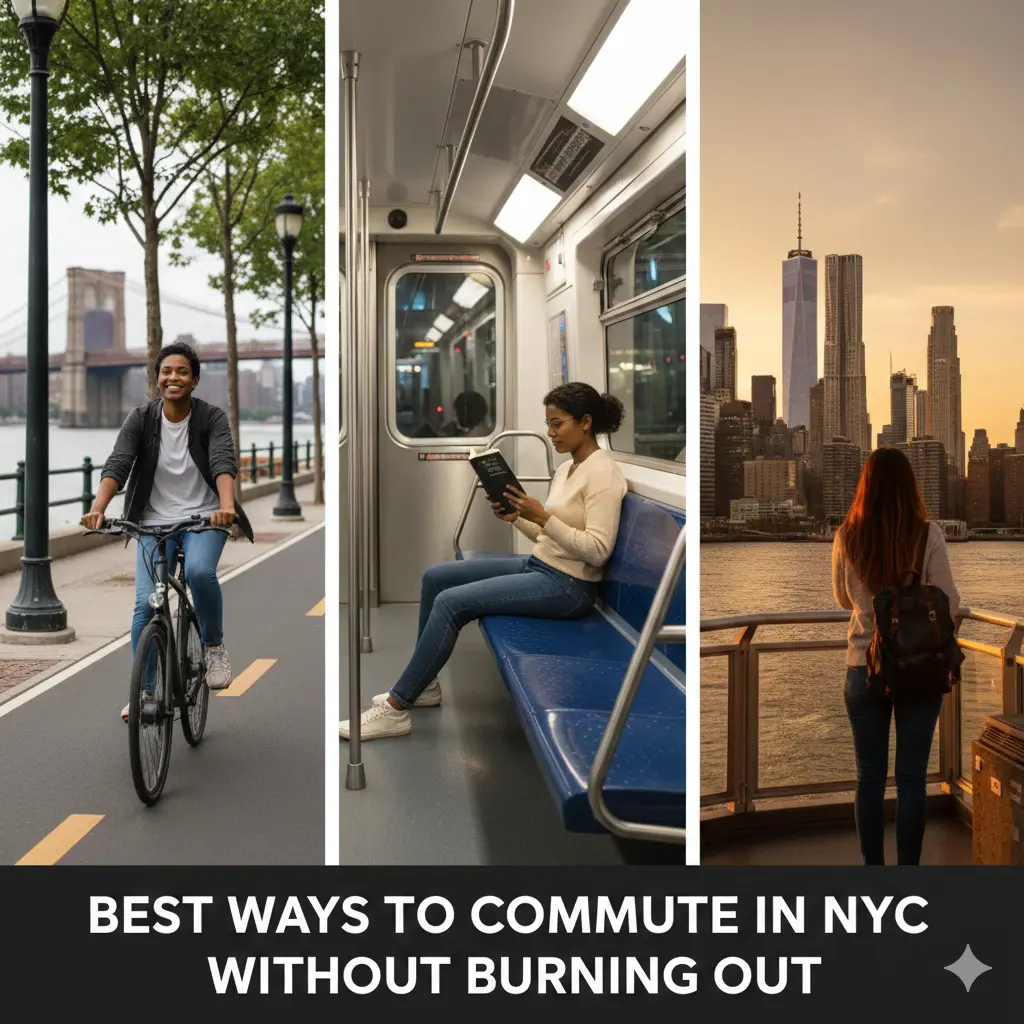
Introduction
The best ways to commute in [City] aren’t always the fastest—they’re the ones that protect your energy day after day. Locals who commute sustainably focus on predictability, mental ease, and recovery, not just minutes saved
Commuting is one of the most repeated actions in city life, which means small inefficiencies or stresses compound quickly. This article explains how residents choose commuting methods that feel tolerable long-term, how to reduce burnout without changing jobs or homes, and how to design a commute that works with your day instead of against it.
Table of Contents
Why Commuting Causes Burnout
How Locals Define a “Good” Commute
Commute Options That Age Well
Timing and Route Adjustments That Change Everything
Common Commuting Mistakes (and Better Fixes)
Information Gain: Energy Cost vs Time Saved
Real-World Scenario: Designing a Low-Stress Commute
Comparison Table: Fastest vs Most Sustainable Commutes
Why Commuting Causes Burnout
Burnout rarely comes from distance alone—it comes from unpredictability.
The biggest commuting stressors include:
Inconsistent delays
Crowding and noise
Constant decision-making
Over time, these factors drain energy before the day even begins.
The Hidden Cost of “Optimizing” Routes
Chasing the fastest route daily creates mental fatigue.
Why Small Delays Feel Bigger Best ways
Uncertainty amplifies stress more than duration.
How Locals Define a “Good” Commute
Locals judge commutes by how they feel, not how they look on a map.
A good commute usually:
Starts and ends calmly
Has predictable timing
Allows mental transition into and out of the day
[Expert Warning]
A commute that feels tolerable on day one may feel exhausting by month three.
Commute Options That Age Well
Not all commuting methods hold up over time.

One-Seat Journeys
Fewer transfers reduce stress—even if travel time is longer.
Walking + One Mode
A short walk before transit often improves mood and focus.
Off-Peak Adjustments
Slight schedule shifts dramatically change crowd experience.
[Pro-Tip]
If two routes take similar time, choose the quieter one—it’s usually sustainable.
Timing and Route Adjustments That Change Everything
Minor changes produce outsized results.
Leave 10 Minutes Earlier or Later
Avoiding peak congestion lowers stress instantly.
Repeat the Same Route
Consistency reduces decision fatigue.
[Money-Saving Recommendation]
Monthly passes often reduce not just cost—but the stress of per-trip decisions.

Common Commuting Mistakes (and Better Fixes)
Mistake 1: Always Choosing the Fastest Route
Fix: Choose the most predictable route.
Mistake 2: Filling Commute Time With More Tasks
Fix: Use commute time as mental buffer.
Mistake 3: Ignoring Recovery
Fix: Build decompression time after arrival.
Information Gain: Energy Cost vs Time Save
A key SERP gap: most advice optimizes for minutes.
From real-world observation, commuters subconsciously trade time for energy. Saving five minutes at the cost of high stress is rarely worth it long-term. Sustainable commuters accept slightly longer travel in exchange for calmer mornings and evenings.
Burnout decreases when energy cost—not speed—becomes the primary metric.
Real-World Scenario: Designing a Low-Stress Commute
The commute stops being a battle and becomes a transition.
Fastest vs Most Sustainable Commutes (Comparison Table)
| Factor | Fastest Commute | Sustainable Commute |
| Focus | Time | Energy |
| Stress | High | Low |
| Predictability | Variable | Stable |
| Burnout Risk | High | Low |
| Long-Term Fit | Poor | Strong |
Contextual YouTube Embeds (Playable)
FAQs (Schema-Ready)
What’s the least stressful way to commute?
Predictable routes with minimal transfers.
Is a longer commute always worseBest ways?
Not if it’s calm and consistent.
Should I avoid peak hours?
If possible, even small shifts help.
Conclusion
The best ways to commute in [City] without burning out prioritize energy over speed. By choosing predictable routes, adjusting timing slightly, and building recovery into your day, commuting becomes manageable instead of draining. Over time, these small choices protect your mood, focus, and overall quality of life.
Internal link
How to Save Money Living in [City] Without Feeling Restricted. – Poison Magazine | Daily Dose of Culture, Fashion, and Trending Topics
External link
News | Harvard T.H. Chan School of Public Health


![Simple City Hacks That Make Daily Life Easier in [City]](https://poisonmagazine.com/wp-content/uploads/2026/01/Simple-City-Hacks-That-Make-Daily-Life-Easier-in-City-214x140.png "Simple City Hacks That Make Daily Life Easier in [City]")
![Daily Life in [City] What Living Here Is Really Like](https://poisonmagazine.com/wp-content/uploads/2026/01/Daily-Life-in-City-What-Living-Here-Is-Really-Like-214x140.webp "Daily Life in [City]: What Living Here Is Really Like")