
Introduction
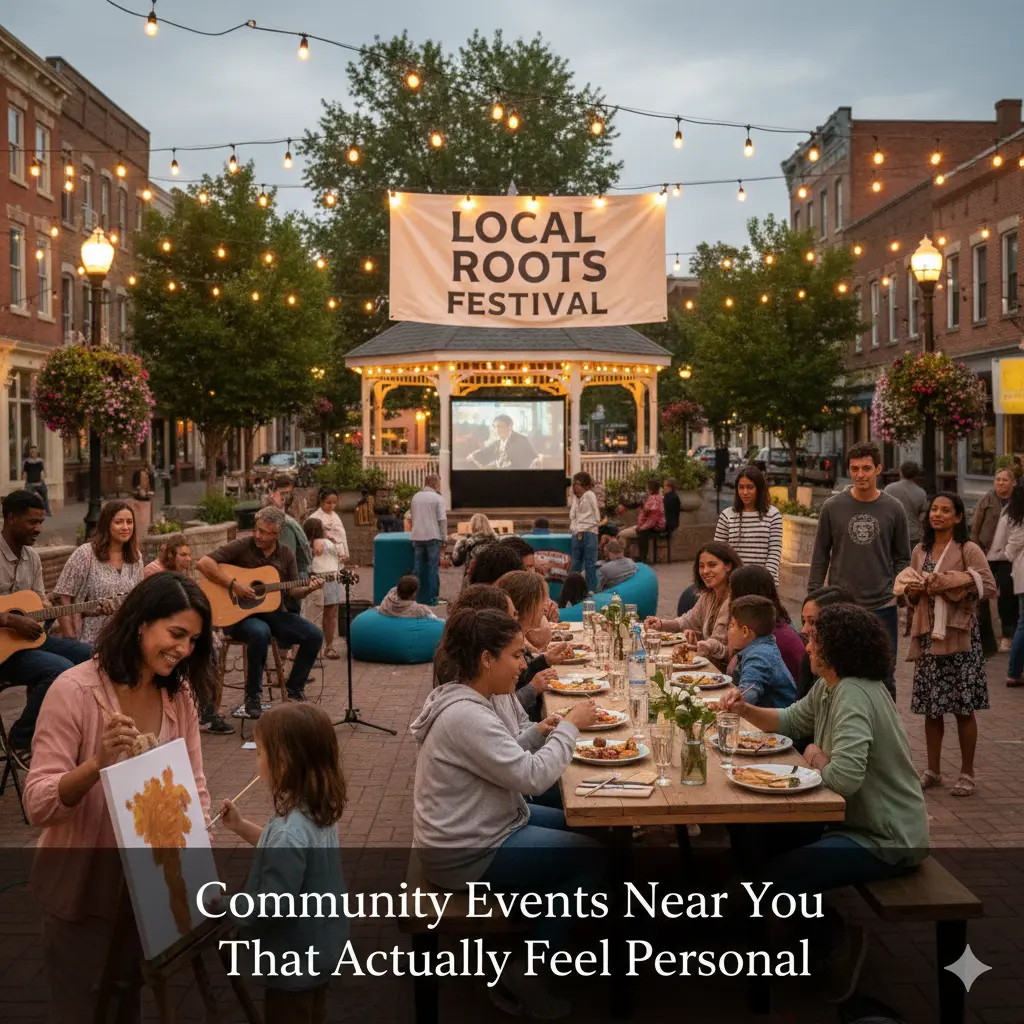
Community events near you feel personal when they are built around people, not scale. These are gatherings where faces become familiar, conversations carry on beyond introductions, and participation matters more than attendance numbers.
As cities grow busier and more fragmented, many people feel disconnected despite having endless event options. Community events fill that gap. This article explains what makes a community event genuinely personal, how locals decide which ones to attend, and how you can participate in ways that build connection instead of feeling like an outsider.
Table of Contents
What Makes a Community Event Feel Personal
Why Community Events Matter More Than Ever
Types of Community Events That Build Real Connection
How Locals Find Events Near Them
Common Community Event Missteps (and Fixes)
Information Gain: Scale vs Belonging
Real-World Scenario: From Attendee to Participant
Comparison Table: Community Events vs Public Gatherings
FAQs
Conclusion
What Makes a Community Event Feel Personal
Personal community events are defined by interaction, not programming.
They usually include:
Small group settings
Shared activities rather than passive watching
Space for conversation
These events are designed so people can recognize each other, not blend into a crowd.
H3: Familiarity Over Formality
Informal settings reduce social barriers.
H3: Why Names Matter
When names are remembered, connection forms naturally.
Why Community Events Matter More Than Ever
Urban life often prioritizes efficiency over connection.
Community events counter this by:
Creating low-pressure social spaces
Encouraging repeated attendance
Supporting local identity
[Expert Warning]
Events that grow too fast often lose the intimacy that makes them valuable.
Types of Community Events That Build Real Connection
Not all community events feel the same.
H3: Skill-Based Gatherings
Workshops, language exchanges, and hobby meetups.
H3: Neighborhood Activities
Cleanups, shared meals, or local celebrations.
H3: Recurring Meetups
Weekly or monthly events build trust over time.
How Locals Find Events Near Them
Discovery is usually local and relational.
H3: Physical Noticeboards and Local Spaces
Libraries, cafés, and community centers remain key.
H3: Word-of-Mouth Networks
Friends invite friends—trust travels with the invitation.
[Pro-Tip]
Events held regularly in the same place tend to feel more welcoming.
Common Community Event Missteps (and Fixes)
Misstep 1: Treating Events Like Entertainment
Fix: Participate actively, even in small ways.
Misstep 2: Expecting Instant Belonging
Fix: Attend more than once.
Misstep 3: Overcommitting Too Quickly
Fix: Start small and build comfort gradually.
[Money-Saving Recommendation]
Community events are often free—support them with time or help instead of money.
Information Gain: Scale vs Belonging
A key SERP gap: many guides equate attendance size with success.
From real-world observation, belonging decreases as scale increases. Smaller groups:
Encourage conversation
Reduce social pressure
Build shared memory
Community events thrive when they resist growth beyond what interaction allows.
Real-World Scenario: From Attendee to Participant
In practical situations, the shift from observer to participant changes everything. Helping set up chairs, joining a group activity, or staying a few minutes longer often turns a neutral event into a meaningful one. Participation signals interest—and interest invites connection.
Community Events vs Public Gatherings (Comparison Table)
| Aspect | Community Events | Public Gatherings |
| Group Size | Small | Large |
| Interaction | High | Low |
| Repeat Attendance | Common | Rare |
| Atmosphere | Welcoming | Anonymous |
| Sense of Belonging | Strong | Weak |
Contextual YouTube Embeds (Playable)
FAQs
What are community events?
Small local gatherings focused on shared interests or needs.
Are community events open to newcomers?
Most are, especially recurring ones.
Do I need to register?
Often no—check local notices.
How often should I attend?
Consistency matters more than frequency.
Can community events help make friends?
Yes, when participation is genuine.
Conclusion
Community events near you feel personal because they prioritize people over programming. When you approach them with patience, curiosity, and willingness to participate, they become places of connection rather than just activities. That sense of belonging is what makes community events matter.
Internal link
external link

![Underground Cultural Events in [City] You Won’t See](https://poisonmagazine.com/wp-content/uploads/2026/01/Underground-Cultural-Events-in-City-You-Wont-See-214x140.webp "Underground Cultural Events in [City] You Won’t See")
![Local Festivals in [City] Worth Attending at Least Once](https://poisonmagazine.com/wp-content/uploads/2026/01/Local-Festivals-in-City-Worth-Attending-at-Least-Once-214x140.webp "Local Festivals in [City] Worth Attending at Least Once")